

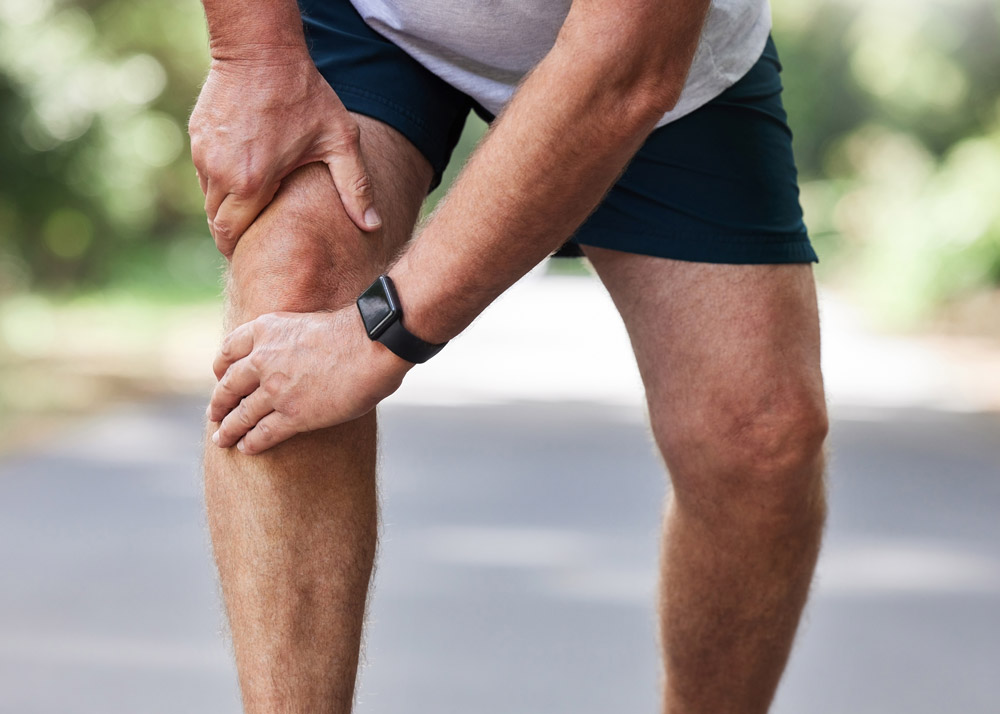
Knee pain can make daily activities harder and lower your quality of life. While surgery is sometimes needed, many knee problems can be treated with nonsurgical options that ease pain, reduce swelling, and help you move better.
The good news is that surgery is not always needed. Many people have had great results and high success rates with nonsurgical knee treatments.
Managing Knee Pain Without Surgery
If you are thinking about knee replacement or dealing with arthritis pain, there are proven ways to feel better and move more easily. Dr. Sheps helps patients get back to their usual activities with a few focused, non-invasive treatments.
These methods are a good alternative to steroid injections, which may become less effective over time and can have side effects. Non-surgical treatments can ease pain and give you more time before you might need a knee replacement.
5 Effective Nonsurgical Options to Treat Knee Pain
Below are five effective nonsurgical ways to treat knee pain.
1. High-intensity Laser Therapy
High-Intensity Laser Therapy delivers concentrated pulses of light energy deep into the knee joint. This energy triggers chemical changes at the cellular level, promoting tissue repair and regeneration. The result is reduced pain, decreased inflammation, and faster recovery.
2. Emfield Pro
EmField Pro uses High-Energy Inductive Therapy (HEIT), delivering strong electromagnetic pulses that penetrate deeply into tissues without direct contact, targeting the underlying sources of knee pain rather than just masking symptoms.
By reducing inflammation, improving circulation, and modulating nerve signals, it can restore mobility and decrease stiffness in the knee joint. Patients often experience faster relief and improved function, especially in cases of chronic pain or arthritis.
3. TECAR therapy
TECAR therapy (Transfer of Energy Capacitive and Resistive) uses radiofrequency energy to generate deep, controlled heat within knee tissues, increasing circulation, reducing inflammation, relaxing tight muscles, and accelerating the body’s natural healing process.
This targeted thermal effect helps relieve pain, restore joint mobility, and support faster recovery in conditions such as arthritis, sprains, and soft tissue injuries.
4. TrueRelief
Its proprietary 20,000 Hz pulsed direct current technology and stainless-steel probe delivery system make it fundamentally different from traditional electrical therapies that use lower frequencies, alternating current, and static electrodes.
TrueRelief is a non-invasive neuromodulation device used by trained clinicians to manage acute and chronic pain as an alternative to opioids.
5. Shockwave Therapy
Shockwave therapy delivers targeted acoustic waves that stimulate the body’s natural healing processes.
Using both focused and radial energy, it increases blood flow, reduces inflammation, breaks down calcium deposits, and relieves pain, making it effective for conditions like osteoarthritis, tendinopathy, and bursitis.
| Therapy | How It Works | Key Benefits | Best For |
| High-Intensity Laser Therapy | Pulses of concentrated light penetrate deep into the knee joint, triggering chemical reactions that promote cellular repair and tissue regeneration. | • Accelerates healing • Reduces inflammation • Stimulates cell regrowth | Arthritis, tendon injuries, chronic knee inflammation |
| EmField Pro (HEIT) | Uses High-Energy Inductive Therapy with strong electromagnetic pulses to stimulate tissues, reduce inflammation, improve circulation, and modulate nerve signals. | • Deep tissue penetration • Strong anti-inflammatory effect • Improves mobility • Pain modulation | Chronic knee pain, inflammation, muscle dysfunction |
| TECAR Therapy | Radiofrequency energy creates deep, controlled heat in tissues via capacitive/resistive modes, increasing circulation and promoting faster healing. | • Boosts blood flow • Reduces swelling • Relaxes muscles • Speeds healing | Arthritis, sprains, ligament strains, muscle tightness |
| TrueRelief | Non-invasive neuromodulation using 20,000 Hz pulsed direct current delivered through a stainless-steel probe—different from standard electrical therapies. | • Strong pain reduction • Opioid-alternative • Targets nerve pathways rather than muscles | Acute and chronic pain, nerve-related knee pain |
| Shockwave Therapy | Sends focused or radial acoustic waves into tissues to stimulate biological healing responses, improve blood flow, and break down calcifications. | • Boosts natural healing • Breaks down calcium deposits • Reduces chronic inflammation • Pain relief | Osteoarthritis, tendinopathy, bursitis, calcification issues |
Choosing the Right Options for Your Treatment Plan
There is no single solution for knee pain. What helps one person may not work for someone else. Often, using a mix of treatments gives better and longer-lasting results. Treatment plans are tailored to each patient’s needs, such as:
- Arthritis
- Cartilage damage
- Patellofemoral pain syndrome
- Sprains or ligament injuries
- Post-fracture recovery
- Post-surgical rehabilitation (ACL repair or knee replacement)
Surgery vs. Nonsurgical Care
Dr. Sheps regularly co-manages orthopedic knee cases and works alongside surgeons when surgery is necessary. These nonsurgical modalities are frequently used:
- Before surgery, to delay or avoid it
- After surgery to improve recovery and outcomes
- Alongside cortisone injections when appropriate
If you are getting PRP injections, be aware that you might feel more discomfort at first before you start to feel better. Using laser therapy after PRP can help improve results, lower swelling, and speed up recovery. Laser therapy is strongly recommended if you choose PRP.
A Smarter Approach to Knee Pain Treatment
At Dr. Sheps’ office, patients have access to many advanced treatment options, not just a few. This means care can be truly personalized, with the right mix of therapies chosen for each person’s needs and recovery goals.
While many clinics use only a few tools, Dr. Sheps takes a complete approach to treating knee pain for patients in Los Angeles. This helps patients get the most effective, minimally invasive care so they can move better, feel less pain, and stay active longer.
If you’re living with knee pain, there may be more options available than you think, without surgery.