


Foot pain, especially chronic issues, can have a huge impact on your overall health. Basic things you do every day, like walking or getting out of bed, can quickly become uncomfortable and even unbearable at times – let alone even entertaining the idea of getting back to the sports or activities that you love.
If you’ve tried options like new shoes, compression socks, or physical therapy and haven’t found the right solution, it may be time to explore a different approach. There are several non-invasive option, however, shockwave therapy has been shown to be effective for many foot conditions and is typically associated with minimal discomfort.
If you’re new to shockwave therapy, or are familiar with what it is but want to learn more, keep reading to learn everything you should know about the process. For over 2 decades, Dr. Sheps has providing shockwave therapy to successfully treat his patients’ foot pain. See whether shockwave therapy can be an effective option for you, especially when other treatments haven’t worked.
What is Shockwave Therapy?
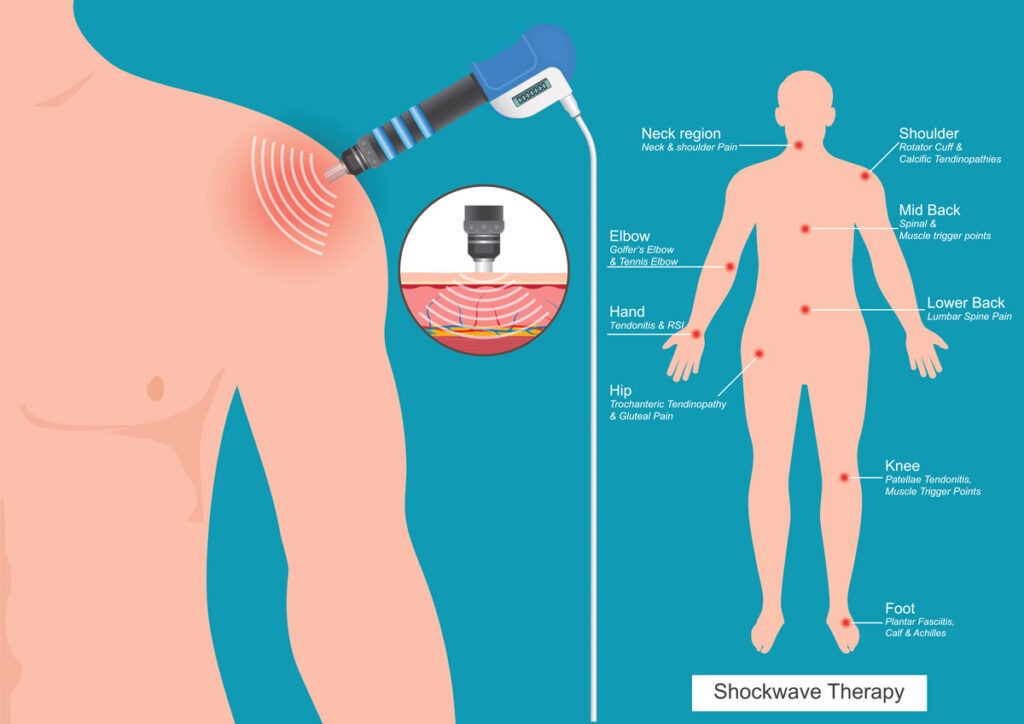
Shockwave therapy is a quick, non-invasive treatment using acoustic waves to stimulate healing in soft tissue. It is used to relieve pain and promote healing for soft tissue injuries, such as tendons and muscles.
During treatment, targeted acoustic (sound) waves are applied to the skin in the area of the foot where you’re experiencing pain. These waves stimulate blood flow and increase circulation, which helps relax tight muscles, reduce pain, and accelerate the body’s natural healing process.
Related Blog: What is Shockwave Therapy? 5 Key Benefits
There are two types of shockwave therapy – radial and focused:
- Focused targets deeper tissues with precision.
- Radial covers broader, more superficial areas.
While many clinics may choose one over the other, some providers, like Dr. Sheps, use them together, as they can complement each other for better outcomes and more effective results.
Shockwave therapy is commonly used to treat chronic, stubborn musculoskeletal conditions, especially when rest, physical therapy, or anti-inflammatories haven’t fully worked. This includes tendon and soft-tissue injuries, especially in areas like the foot, but also for ankle, knee, shoulder, elbow, and hip pain.
How Does Shockwave Therapy Help With Foot Pain?
Shockwave therapy can help relieve foot pain by delivering acoustic waves into the affected tissue, which may stimulate circulation, support tissue repair, and trigger the body’s natural healing response.
As blood flow increases, damaged tissue can recover more efficiently, inflammation may decrease, and pain can gradually improve. It is often used for persistent or chronic foot conditions that have not responded to conservative treatments like rest or physical therapy.
Types of Foot Pain Can It Treat
Shockwave therapy is commonly used for several specific foot conditions, including:
- Plantar fasciitis – pain in the heel or arch caused by inflammation of the plantar fascia
- Achilles tendinitis – pain and stiffness in the back of the heel
- Heel spurs – calcium deposits that cause sharp heel pain
- Tendon injuries – overuse or strain in the foot and ankle tendons
- Chronic foot pain – lingering discomfort from repetitive stress or poor biomechanics
It’s typically recommended when pain becomes persistent and hasn’t improved with conservative treatments like stretching, orthotics, or physical therapy.
5 Things to Know About Shockwave Therapy for Foot Pain
Dr. Sheps uses Shockwave Therapy for many patients experiencing foot pain of all types. Here are 5 things to know about:
- The ideal patient for shockwave therapy for a foot injury
- What a shockwave therapy session feels like
- Symptoms and soreness after a session
- Length of time per session
- Expected improvement for foot conditions
1. Ideal for patients with chronic foot pain
Shockwave therapy is best suited for patients who have experienced foot pain for more than 6 weeks and have tried a variety of methods, including physical therapy, seeing a podiatrist, rest, or orthotics.
It is especially beneficial for athletes and runners who experience overuse foot injuries from repetitive, high-impact activities, such as basketball, soccer, tennis, long-distance running, track and field, and CrossFit. This includes conditions such as plantar fasciitis, Achilles tendon irritation, heel pain, and arch pain, which often develop from movements like sprinting, jumping, and other explosive actions.
2. The session feels moderate tapping or pulsing
During a shockwave therapy session, you will feel a mild to moderate tapping or pulsing sensation. You’ll likely experience brief discomfort in painful areas of the foot. There may be a sharp or tender feeling right where the injury is, especially with conditions like plantar fasciitis or Achilles issues. Depending on how you respond to the treatment, a clinician may adjust the intensity based.
3. Mild soreness or swelling after a session is normal
After your shockwave session, you may feel mild soreness or bruising in the treated area. Slight stiffness in the heel or foot for a few hours to 1–2 days, and occasional mild swelling. These signs are generally a normal part of the healing response.
Walking is typically fine and encouraged at a normal level; however, high-impact activities like jumping, running, or participating in sports should be avoided for a day or two, depending on how you feel after a session.
4. The sessions are relatively short
The actual application of shockwave is quick, with most of the time spent properly targeting the painful area and adjusting intensity for comfort. The sessions are pretty short, lasting all of 5-10 minutes for the treatment of a foot injury.
While the treatment itself is brief, your clinician may also take a few minutes before or after the session to assess your symptoms, ensure correct positioning, and discuss your response.
5. You should feel improvement pretty quickly after starting sessions
Many patients notice improvement in symptoms after the first few sessions. You’ll need about 3-5 sessions to start, ideally spaced weekly. Pain relief from foot injuries or conditions is not instant, but rather, a gradual improvement that happens over time.
Common early signs of progress include:
- Reduced instances of “first-step” morning pain or stiffness in the foot
- Less discomfort during daily activity
- Decreased sharp pain during push-off, running, or jumping
- Fewer flare-ups felt after light activity
Depending on severity and response, many patients return to sport or higher activity levels several weeks removed from the start of treatment, with some requiring additional time.
Get The Relief You’re Looking For From Stubborn Foot Pain
Whether you are dealing with plantar fasciitis, heel spurs, or chronic tendon irritation, shockwave therapy can be an effective non-invasive option to getting over your injury.
At his clinic in Brentwood, Dr. Sheps uses shockwave therapy in Los Angeles to treat patients with a variety of injuries. He has recently introduced EMTT (Extracorporeal Magnetotransduction Therapy), which enhances traditional care by combining radial and focused shockwave therapy with high-energy magnetic stimulation.
This approach treats both broad and deep tissue layers, making it especially effective for persistent foot conditions like addressing pain at multiple depths and promoting cellular repair to optimize outcomes and support faster, more complete recovery.
If you’ve been struggling with ongoing foot discomfort and still haven’t found a solution that has worked, consider scheduling a consultation to see if shockwave therapy is right for you.